
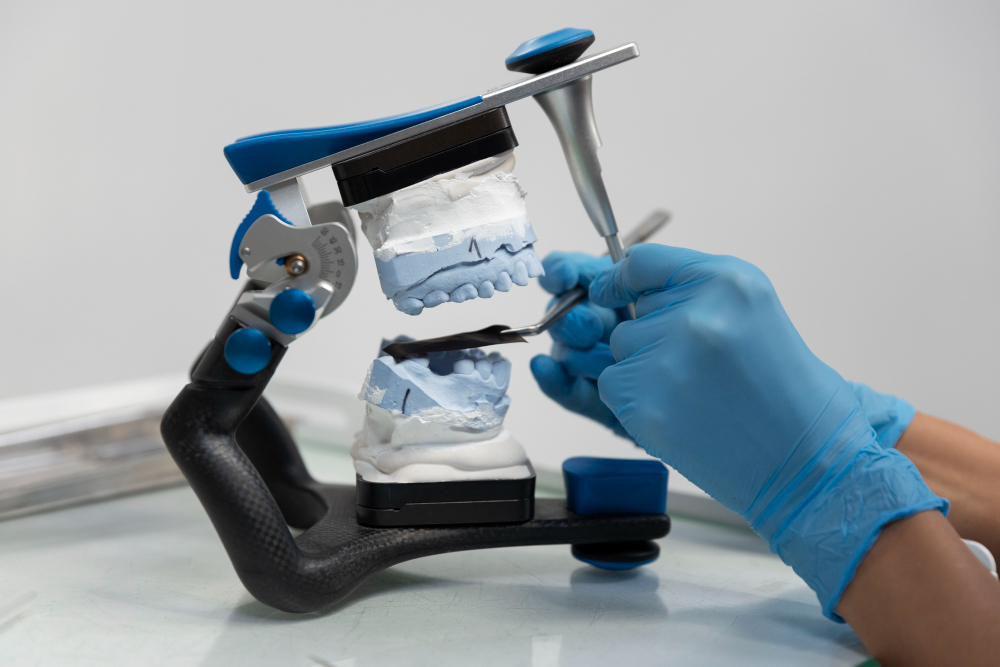
In recent years, 3D printing has revolutionized the world of dental implants, offering unmatched precision and customization. At the International Institute of Implantology and Advanced Aesthetics, we embrace this cutting-edge technology to enhance the skills of dental professionals, helping them provide patients with personalized and high-quality implant solutions. 3D printed dental implants are transforming both the design and placement process, offering faster, more accurate results. In this post, we explore how 3D printing is shaping the future of custom implant design in 2026.
What are 3D printed dental implants?
3D printed dental implants are advanced, custom-made solutions that leverage 3D printing technology to create implants tailored to each patient’s unique needs. Unlike traditional implants, which are mass-produced, 3D printed implants are designed with a high degree of precision and personalization. Using digital scans of the patient’s mouth, the implants are printed layer by layer using biocompatible materials such as titanium or specialized polymers.
This method ensures that the implants fit perfectly, improving both comfort and effectiveness. 3D printing also allows for the creation of complex shapes and structures, which are often impossible to achieve with traditional manufacturing methods. By integrating this technology, dental professionals can offer highly accurate and individualized treatment options for their patients.
Benefits of 3D Printing for Custom Implants
3D printing brings numerous benefits to the dental implant process, particularly in terms of customization and precision. One of the primary advantages is the ability to create highly personalized implants that perfectly fit the patient’s unique anatomy. Traditional implants may require adjustments during surgery, but 3D printed dental implants are designed with exact measurements, reducing the need for alterations and ensuring a more comfortable fit.
Additionally, 3D printing enables faster production times. Since the implants are printed directly from digital scans, there’s less need for traditional molding or manual adjustments, which reduces waiting times for patients. This speed also translates to more efficient surgeries, as dental professionals can work with highly accurate, ready-to-use components.
The customization offered by 3D printing also extends to the creation of surgical guides, which ensure accurate placement of implants. These guides can be tailored to the patient’s mouth, enhancing precision during surgery and ultimately improving the success rates of implant placements.
With 3D printing, dental professionals can provide a level of care that was previously difficult to achieve, resulting in better outcomes, quicker recovery times, and greater patient satisfaction.
How 3D printing improves surgical planning with guides
One of the key innovations in 3D printing for dental implants is the creation of customized surgical guides. These guides, made from 3D printed materials, provide dental professionals with precise templates to place implants accurately within the patient’s mouth. Traditional surgical methods may rely on standard templates, but 3D printed guides are tailored specifically to the patient’s anatomy, ensuring that implants are placed with maximum precision.
By using these guides, dental professionals can reduce the risk of complications and improve the overall success of the surgery. The guides help ensure the correct positioning and angling of the implant, especially in complex cases or areas with limited space. This accuracy leads to more predictable outcomes and a smoother recovery process for patients.
In addition, 3D printed surgical guides save time during procedures, as they eliminate guesswork and reduce the need for intraoperative adjustments, making the entire process more efficient.
Longevity and durability of 3D printed implants
3D printed dental implants offer impressive longevity and durability, often comparable to traditional implants made from titanium. The biocompatible materials used in 3D printing, such as titanium and high-quality polymers, ensure that the implants can withstand the daily stresses of chewing and grinding.
The precision in design also contributes to a better fit, which reduces the risk of wear and tear. While the lifespan of 3D printed implants largely depends on factors like material choice and patient care, they generally offer long-lasting results and reliable performance, making them an excellent investment for both patients and dental professionals.
Featured questions about 3D printed dental implants
Many dental professionals and patients have questions about the capabilities and reliability of 3D printed dental implants. Here are some common queries:
- Can dental implants be 3D printed? Yes, 3D printing technology allows for the creation of highly accurate, customized dental implants tailored to individual patients.
- Are 3D printed dentures any good? 3D printed dentures offer improved fit and comfort compared to traditional dentures, with better customization options.
- Has there been a successful 3D printed organ transplant? While 3D printed organ transplants are still in the experimental phase, advances in 3D printing offer exciting possibilities for future medical treatments.
These innovations highlight the growing potential of 3D printing in both dental and medical fields.
Embracing the future of dental implants
3D printing is transforming dental implantology by offering greater precision, customization, and efficiency. As this technology continues to evolve, dental professionals must embrace these advancements to provide patients with the best possible care.
At the International Institute of Implantology and Advanced Aesthetics, we are committed to educating professionals on these innovations.


 Call us